
Searching for a Warrant in Bradley County
Tennessee offers no single statewide warrant-search portal. The Bradley County Sheriff site posts no searchable active-warrant database either. So work from the court that likely holds the case. The Tennessee Courts clerk directory tells you to reach the clerk in the county where the case began. General Sessions is the usual first stop for misdemeanors, traffic matters, and preliminary hearings. Circuit and Criminal Court keep their own records desk. When you call, ask what staff can confirm by phone, what identity details they need, and whether you must file a records request or come in person. A short call saves a wasted trip. Start there.
- Identify whether the case is county, city, juvenile, another Tennessee county, or federal.
- Call the originating clerk with your name and any case or citation number.
- For a Cleveland ticket, use the municipal portal, then confirm missed-court status with City Court.
- For Charleston, ask the city recorder where summons and disposition records are kept.
- For Sheriff-held material, follow the TPRA request instructions; ask counsel about a possible active warrant.
Bradley County Warrant Searches Skip Appellate History
Tennessee's Public Case History is an appellate tool, full stop. It helps you follow an appeal, but it cannot search trial-court records for a Bradley County arrest warrant, bench warrant, or traffic warrant. A blank appellate result proves nothing about a lower-court docket. Keep the courts straight. Bradley County General Sessions, Circuit, and Criminal Court, plus Cleveland Municipal Court and Charleston Municipal Court, each maintain separate records, and the issuing court is the one that can identify its current docket entry. For a matter filed in another county, call that county's clerk. The Public Case History page spells out its appellate scope and update timing.
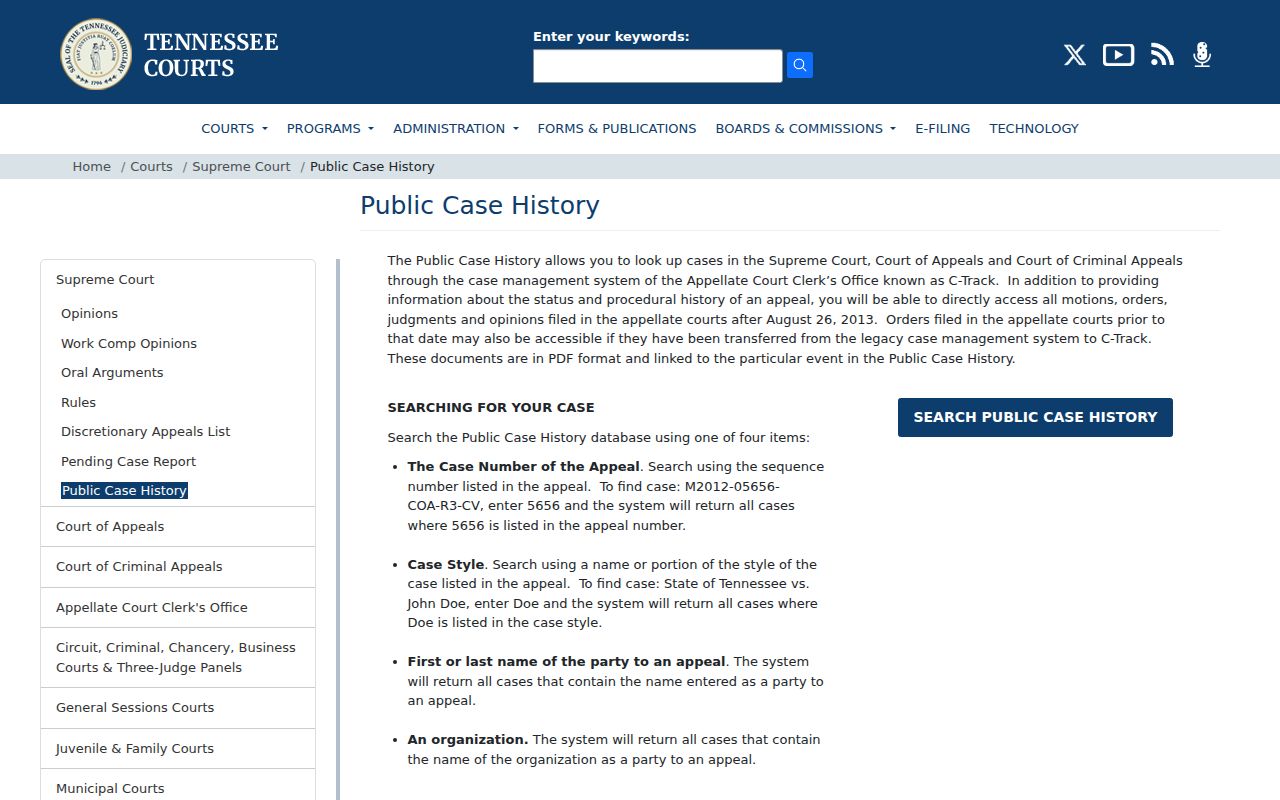
This distinction keeps an appeal search from being mistaken for a local warrant check.
Warrant Search Fields Explained
The Bradley County Sheriff publishes no public warrant form, so there are no county fields to list. Cleveland's city portal is the one local interface that shows search fields, but it tracks violations and citations, not county criminal warrants. The table covers that city form alone, so treat it as a citation tool rather than a broader Bradley County record system.
| Official route | Information requested | What it covers | Limit |
|---|---|---|---|
| Cleveland portal | Citation number | City violation | Not a county warrant search |
| Cleveland portal | License, state, birth date | Citation identification | Use only on official portal |
| Cleveland portal | Plate and registration state | Vehicle citation path | Not a statewide driver record |
| Originating clerk | Name, case details, court/date | Clerk-held docket | Ask clerk what is needed |
| Sheriff TPRA form | Record description and Tennessee ID | Agency-held public records | Formal request, possible cost |
Never send sensitive identity details to an office that does not need them, and never post them publicly. Use the secure Cleveland form only to look up a Bradley County city citation through that portal.
Bradley County Warrant Lookup: Cleveland Citations
Cleveland's official Search violations portal offers five ways to pull up a city citation. You can search by citation number, by driver's-license number with state and date of birth, by Social Security number and date of birth, by license plate with registration state, or by first and last name with date of birth. All five lead into the same municipal citation system. A match can help you find a Cleveland violation or a payment record. It cannot tell you whether General Sessions or Circuit Criminal Court issued separate process. A no-result clears nothing at the county level. If the citation is old or a court date was missed, call the clerk and ask about a default judgment, a license report, a warrant, or any other order on file.
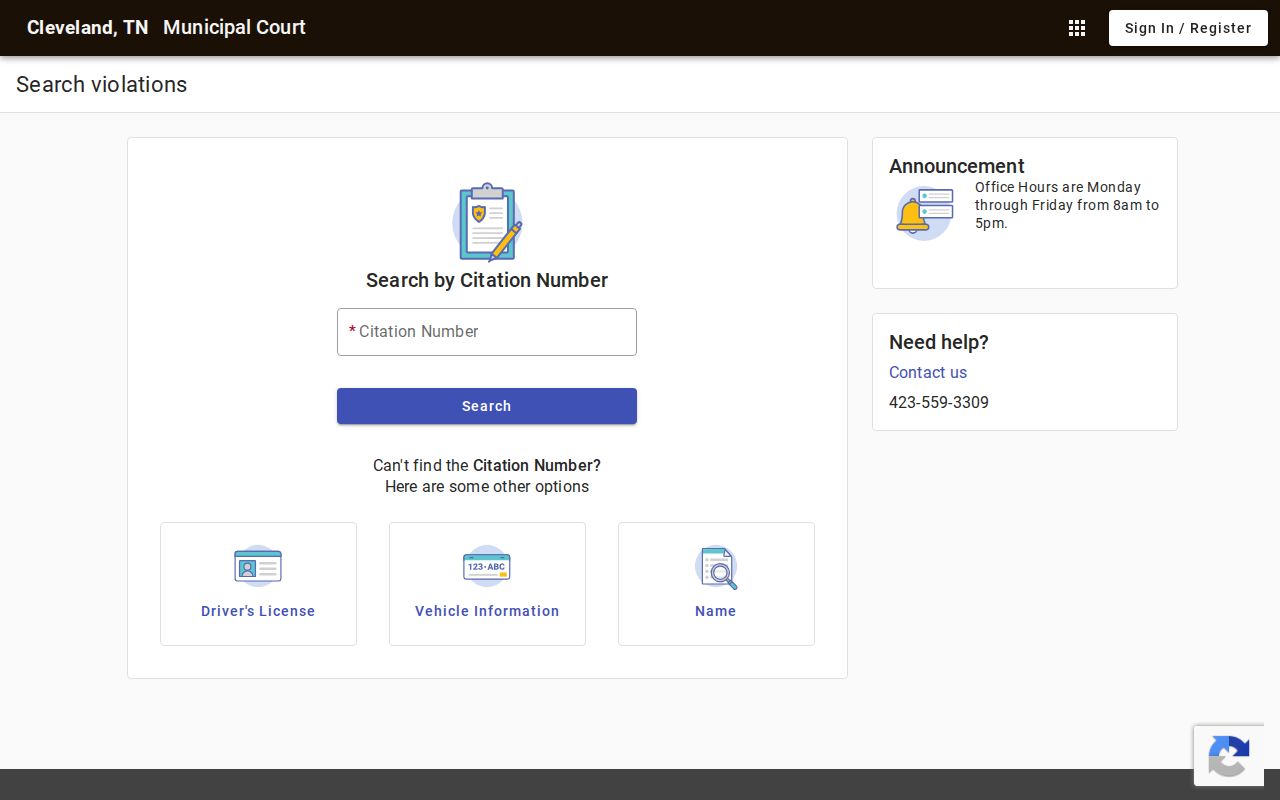
The portal’s fields identify citations and should be described with that narrow purpose.
What a Warrant Search Shows
Bradley County publishes no public warrant result page or sample case number. Tennessee Rule 4 materials describe the concepts that may appear in a warrant or summons record. The actual docket controls. The clerk can tell you which fields the court maintains.
| Reference | Ask the clerk for the case number; no public county format was found. |
|---|---|
| Issuing authority | Shows which court or judicial officer issued the process. |
| Offense | Use the exact docket language and ask the clerk about unfamiliar terms. |
| Service return | May record service or outcome; ask whether a return is on file. |
| Current status | Confirm active, served, recalled, or other status with the issuing office. |
| Bond | No general Bradley criminal bond schedule was located. |
An old web entry will not confirm current status in Bradley County. Ask the originating office for the record date and every action entered after it.
Bradley County Warrant Calls Need Number Checks
The official Bradley County pages disagree on phone numbers, so verify before you dial. The county clerk page lists 423-728-7050 for General Sessions Criminal Court, while the Sheriff directory lists 423-728-7052 for General Sessions. The Sheriff directory gives Criminal Court at 423-728-7056; the county clerk page gives Circuit Criminal at 423-728-7057. Cleveland's FAQ points warrant questions to the General Sessions Clerk at 423-728-7048. Each number belongs to its listing source. None is a dedicated warrant hotline. Start with the court named on your citation or paperwork, and confirm the current desk before you travel. Sheriff Judicial Services answers at 423-728-7304, and general Sheriff information is 423-728-7300. When the right desk is unclear, name the court, date, and document type. Ask staff to route you rather than repeating private details around Bradley County.
Where to Check Warrants in Bradley County
For a criminal-court status question, start with the clerk of the court that originated the case. Sheriff Judicial Services and Criminal Court contacts can help with law-enforcement routing. Cleveland Municipal Court handles the city's citations and ordinance matters, and Charleston's recorder keeps its municipal court records. Juvenile records stay restricted, so a general public request will not surface juvenile names. The Bradley County Sheriff's directory lists the separate divisions. For a public agency record, the official TPRA form instructions cover ID, signature, citizenship, timing, and possible labor-cost rules. A formal request takes time and is not an instant warrant confirmation. Federal matters sit outside the Bradley County system entirely. The Chattanooga federal clerk and PACER hold federal docket records, and sealed warrants may not be visible there.
Bradley County Warrant Records and TPRA
A Bradley County warrant records request through the Sheriff’s Office has a firm checklist. The request must be signed, come from a Tennessee citizen, and carry a current Tennessee photo ID showing the residential address. Add contact information and a clear description of the records sought, naming the record and date range, plus the court, agency, case, or citation number if you know it. Unsigned submissions, or ones without the specified ID, go nowhere. The electronic TPRA form spells out the citizenship and identity instructions. Staff then have seven business days to grant access or copies, deny the request with an exemption, or explain when records will be available. Copy and labor fees can apply. When locating, retrieval, or redaction takes more than an hour, an estimate and your approval come first. The Sheriff posts no separate fee schedule, so ask about costs before committing to a large request.
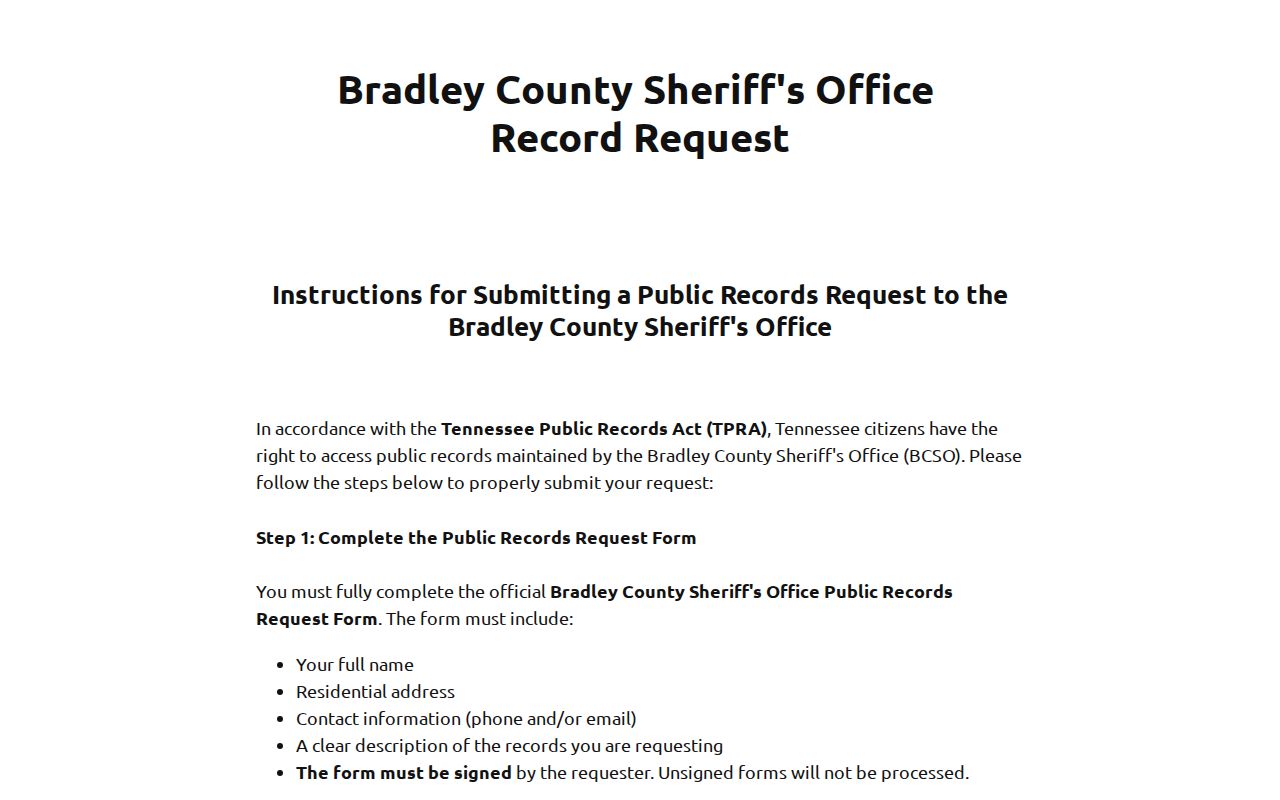
The request form is for records the Sheriff holds, not a statewide name search.
Restricted Warrants and Access Rules
Some limits come from Tennessee Rule 34 and statute, not from any Bradley County clerk’s preference. Juvenile court records stay confidential except in narrow, defined situations. A sealed record, or a file withheld under an investigation exception, will not be released through an ordinary request. The records office can tell you which rule governs its answer.
Access notes:
Rule 34 covers access to court records and exceptions.
Tennessee juvenile-record guidance explains confidentiality and limited statutory access.
A missing online result may reflect the wrong court, timing, a restriction, or a record that is not indexed.
A denial settles nothing about the case itself; it only marks a closed file. Call the Bradley County office that holds the record and ask what may be released or whether a separate court process is required.
Bradley County Warrant Questions vs Federal Records
Federal warrants sit outside Bradley County courtrooms entirely. The U.S. District Court for the Eastern District of Tennessee runs a Chattanooga Division, and PACER opens federal dockets to the public. A warrant can be sealed or absent before service. So an empty docket result proves little. Even an official no-result is no guarantee that no federal warrant exists. A federal clerk or a lawyer can point you to the right channel. Juvenile matters take a separate path under Tennessee law, and no public list will hand over a child’s name. Parties and parents with a legal right to records should ask the Juvenile Court clerk what proof and process apply. Keep each inquiry inside the court system that actually holds it, since a Sheriff booking page, an appellate case-history page, a municipal portal, and a federal docket each answer different questions.